-
Posted: March 04, 2026
 Read more »
Security, fire, and life safety companies understand that compliance is part of doing business. Licenses must be renewed, technicians must earn continuing education, and supporting documentation such as insurance certificates and background checks must remain current. Those requirements are expected. What is not expected is how quickly visibility begins to erode as the organization grows.
When compliance data is spread across spreadsheets, inboxes, and shared drives, leadership may believe everything is covered, yet no one has a complete, real-time view of status across the company. A license nearing expiration, a technician short on CEUs, or a missing document may not surface until a renewal deadline or contract review forces the issue. The information exists, but without centralization, it is difficult to confirm accuracy with confidence.
This is where exposure begins, not because compliance is ignored, but because the process lacks structure.
When Growth Outpaces the System
Manual tracking
-
Posted: March 02, 2026
 Read more »
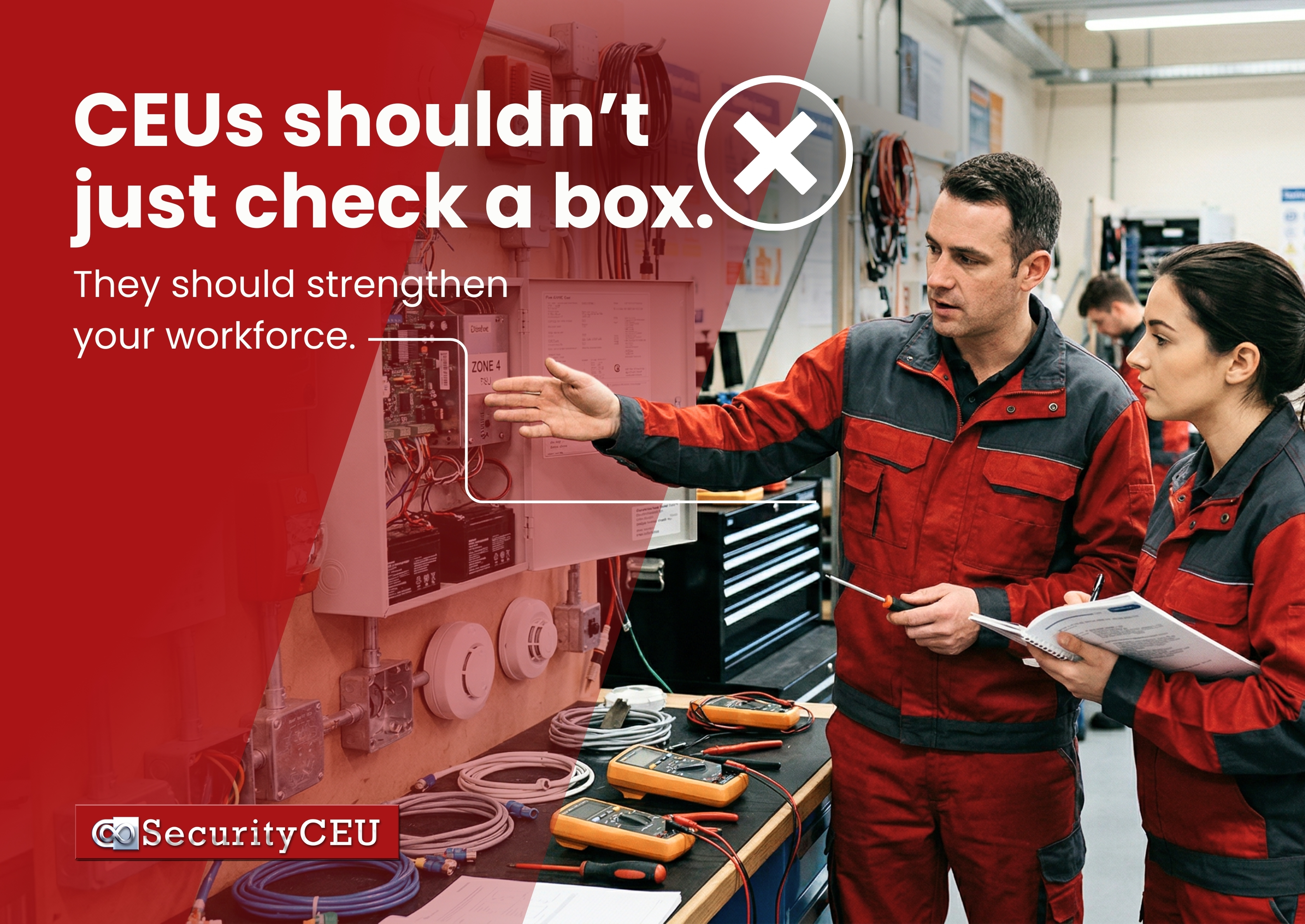
In the security, fire, and life safety industries, continuing education is required. Technicians need CEUs to renew licenses, and companies need documentation to remain compliant. Too often, the focus stops there.
That approach limits the value of training. When CEUs are treated only as a renewal requirement, they satisfy regulations but rarely strengthen performance. When they are structured intentionally, they improve field execution, reinforce installation standards, and reduce compliance risk across the organization.
The difference is not in the number of hours. It is in how the training is built and managed.
Closing the Gap Between Approval and Application
Many CEU providers focus on meeting minimum state criteria. If a course is approved and the hours count, it is considered complete. Approval alone, however, does not guarantee practical value.
SecurityCEU.com was created specifically for the security, fire, and life safety industry to ensure training aligns with real-world responsibilities.