-
Posted: July 24, 2025
 Read more »
What techs need to know before tackling the first rung of NICET certification.
There comes a point in most fire alarm technicians’ careers when hands-on experience isn’t enough. Whether you’re looking to move up, meet licensing requirements, or simply prove you know what you’re doing, getting NICET certified becomes part of the path. And for that, Level I is where it all starts.
The good news? You don’t have to go it alone—or dig through dry PDFs, outdated flashcards, and 30-year-old code references to figure out what’s on the test.
Our NICET Fire Alarm Level I Prep Course is built for working techs who are ready to take that next step without wasting time.
If you’re serious about getting certified, get the right prep from day one—enroll today and make the process a whole lot easier.
Real-World Content, No Fluff
This isn’t an academic deep dive. It’s a practical, to-the-point course that walks you through the core knowledge areas NICET actually tests. Every section is aligned with real
-
Posted: July 23, 2025
 Read more »
Regulatory change is the constant that security integrators and dealers cannot ignore. One week, licensing requirements in a key state seem familiar. The next, a new mandate appears, a deadline moves, or an entire process is rewritten. The stakes are high. According to a 2017 Ponemon Institute study, the average cost of non‑compliance tops $14.8 million per year for U.S. businesses—nearly three times more than staying compliant. For security companies built on trust and precision, a single missed renewal can threaten licenses, contracts, and reputation.
If you still track CEUs and license renewals by hand, you are vulnerable. Schedule your free Obsequio demo now to see how effortless compliance can be: SecurityCEU.com/Obsequio • 502‑254‑1590 ext 101
The Compliance Challenge: Complexity, Volume, and Change
Security integrators and dealers navigate a maze of jurisdictional rules. Requirements vary significantly by state and license type—alarm technicians in Texas must complete 8 hours
-
Posted: July 07, 2025
 Read more »
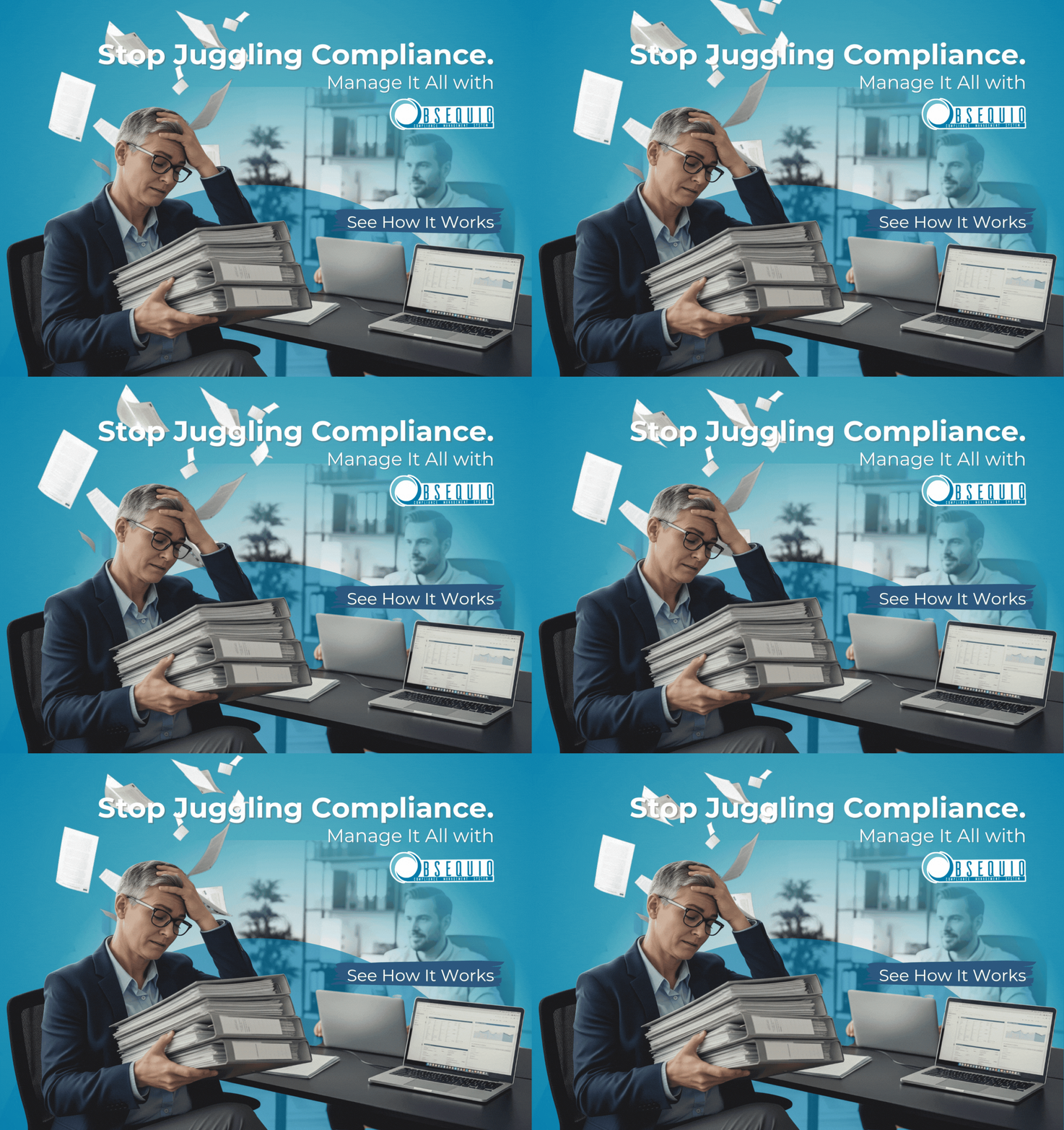
Your best technician just called with news that makes your stomach drop. The customer is asking for proof of his Axis certification for tomorrow's installation, but nobody can find the current certificate. His state license? Perfect. His manufacturer credentials? Missing in action.
Welcome to the dual compliance nightmare that's costing security companies projects, credibility, and sleep.
The Hidden Complexity of Security Industry Compliance
Security professionals operate under a compliance framework that would make accountants weep. You're not just managing one set of requirements - you're juggling multiple, overlapping compliance obligations that operate on different schedules, have different renewal processes, and require different documentation.
State Licensing Requirements Across 44 states and the District of Columbia, security professionals need valid licenses to legally install, maintain, sell, support, or monitor security systems. These licenses typically require:
- Initial applications
-
Posted: July 01, 2025
 Read more »
Your project manager just walked into your office with that look. You know the one - the expression that says a routine installation has gone completely sideways. Again.
Welcome to the expensive reality of poor project management in the security integration business.
The $1,000 Daily Drain
Let's talk numbers. A skilled project manager generates approximately $1,000 in value per day for a security integration company. When that PM gets pulled away from active project management to fix problems, fight fires, or untangle messes that proper planning could have prevented, that value evaporates.
But the real kicker? The cost compounds. Every day your PM spends cleaning up one project's problems is a day they're not properly managing three others. The ripple effect spreads through your entire operation like a virus.
Where Security Projects Bleed Money
Scope Creep: The Silent Profit Killer
You bid a $100,000 access control project with healthy 35% margins. Six months later, you're staring at $140,000