-
Posted: April 17, 2024
 Read more »
5 Ways Obsequio Makes Security License Renewal a Forget-About-It Breeze
Staying compliant with security license renewals in today's complex regulatory landscape can feel like walking a tightrope – one missed deadline or misplaced document could lead to hefty fines, business disruptions, and even legal repercussions. But what if there was a way to eliminate the stress and streamline the entire process?
Obsequio is your secret weapon for transforming security license renewal from a bureaucratic nightmare into a forget-about-it breeze. Here's how:
- Automated Renewal Guardian: Ditch the spreadsheets and sticky notes. Obsequio automates the entire renewal process, sending customizable email alerts 90, 60, and 30 days before a license expires. This ensures your team has ample time to renew and eliminates the risk of accidental lapses that can cost you dearly.
- Data Management on Autopilot: Obsequio boasts a centralized database containing over 500 pre-populated data points specific to security,
-
Posted: March 10, 2024
 Read more »
SecurityCEU.com’s Subscription Model: Revolutionizing Professional Development in the Security Industry:
Success in the electronic security industry requires a commitment to continuous learning and professional development. This can be a difficult process without the right tools, platform, and support.
SecurityCEU.com, powered by The CMOOR Group, has revolutionized the approach to continuing education for security professionals with its innovative subscription model.
This model not only provides unmatched flexibility and value but also ensures that learners have access to a comprehensive range of courses tailored to their needs.
Unrivaled Flexibility for Continuous Learning
The heart of SecurityCEU.com’s offering is its Library Subscription model, which allows learners to access an entire catalog of CEU-approved courses for a single, low fee. This approach is designed to cater to the varied needs of professionals in the security industry, offering:
- Access Control
- Basic Low Voltage Skills
-
Posted: March 10, 2024
 Read more »
Streamlining Security Compliance: A Deep Dive into Obsequio’s Key Features
In the volumes of regulations governing the security industry, maintaining compliance through proper licensing and certification is not just a requirement; it's a cornerstone of operational integrity and professionalism. Across 44 states and the District of Columbia, security professionals face a daunting task: navigating the complex, often murky waters of state and local regulations to ensure every technician, installer, and support staff member holds a valid license. The risks of non-compliance are severe, ranging from hefty fines to business shutdowns and, in some scenarios, jail time.
Fortunately, there is a tool designed specifically for the security industry to help manage this burden-- Obsequio Compliance Management System.
Obsequio isn't just another compliance tool; it's a comprehensive compliance management system that revolutionizes how licensing and certification renewals are managed. Through advanced
-
Posted: February 15, 2024
 Read more »
5 Common Compliance Pitfalls in the Security Industry and How to Avoid Them
In the tightly regulated world of the security industry, staying compliant isn't just about ticking boxes; it's about safeguarding your business's future. With regulations spanning across states and even city levels, it's easy to stumble into pitfalls that can lead to hefty fines, operational disruptions, or worse.
Here, we explore five common compliance mistakes in the security industry and provide practical tips to help you navigate these challenges effectively.
1. Overlooking Local and State Regulations
Many security businesses understand the need for federal compliance but often underestimate the complexity of state and local regulations. This oversight can be costly.
How to Avoid It: Make it a priority to understand the specific licensing requirements in every area you operate. Tools like Obsequio offer centralized databases that simplify this process, ensuring you stay informed and compliant at all levels.
-
Posted: February 14, 2024
 Read more »
Navigating Licensing and CEU Requirements for Security and Fire Companies in Alabama:
In the security and fire safety industry, understanding and adhering to state-specific licensing and continuing education unit (CEU) requirements is crucial for company owners in Alabama. This guide aims to demystify the processes overseen by the Alabama Electronic Security Board of Licensure (AESBL) for security services and the State Fire Marshal's Office (SFMO) for fire services, ensuring you easily navigate these regulatory waters.
The Essentials of Licensing in Alabama
The AESBL regulates licensing for commercial and residential burglar alarm systems, electronic access control, closed-circuit television (CCTV), monitoring, and locksmith services. Companies and individuals must submit a comprehensive application that includes background checks, proof of general liability insurance, business licenses, and applicable fees to operate legally.
For fire services, the SFMO mandates licensing for individuals
-
Posted: January 24, 2024
 Read more »
Obsequio: Elevating Security Compliance Amidst State Licensing Requirements
Navigating the labyrinth of state licensing requirements in the security industry can be a daunting task, requiring meticulous attention to detail and a commitment to staying ahead of ever-changing regulations. In this dynamic landscape, Obsequio emerges as the ultimate solution, revolutionizing the management of licensing and certification renewals while seamlessly integrating with diverse state mandates.
Tailored Excellence for State-Specific Needs
Obsequio's user-friendly interface and customizable backend are tailored to accommodate the nuances of state licensing requirements. Security professionals can now effortlessly adapt their compliance strategies to align with the specific demands of each state, ensuring a streamlined and efficient process.
Insightful Reporting for Compliance Precision
With robust reporting capabilities offering insights through four customizable data fields, Obsequio empowers security
-
Posted: January 03, 2024
 Read more »
Navigating the Complex World of Fire and Security Licensing Requirements in Louisiana
Running a business in the fire alarm, security, and CCTV industries can be a daunting task when it comes to navigating the complex web of state regulations. In Louisiana, staying compliant with the Louisiana State Fire Marshal's Office requirements is essential for operating legally and ensuring your business's efficient functioning. In this article, we'll guide you through the specific licensing needs of these industries in Louisiana, and we'll introduce you to Obsequio, your trusted ally in compliance management.
Key Takeaways
- Fire alarm licensing in Louisiana involves a firm application process, specific documentation, and employee qualifications.
- Employees must meet certification requirements, and the firm must have adequate insurance coverage.
- CCTV licensing shares similarities with fire alarm licensing, but specific qualifying criteria and employee requirements must be met.
- Security licensing follows
-
Posted: January 03, 2024
 Read more »
Mastering IP Video Surveillance Systems: Elevate Your Expertise with SecurityCEU.com
In terms of security installations, staying abreast of the latest technologies is paramount. SecurityCEU.com emerges as a beacon of knowledge, offering comprehensive IP Video Training designed to empower security professionals with the skills and insights needed to excel in the ever-evolving landscape of video surveillance.
Unlocking Advanced Expertise
SecurityCEU.com's IP Video Training is a gateway to mastering the intricacies of advanced video surveillance. The courses delve into the essential components of IP video systems, covering topics ranging from system design and equipment selection to installation, integration, analytics, and video management.
Cutting-Edge Training for Tomorrow's Challenges
Recognizing the rapid pace of change in the security industry, SecurityCEU.com ensures that security installers are equipped to meet the challenges of tomorrow. The bundle is meticulously crafted to keep
-
Posted: October 24, 2023
 Read more »
The Vital Role of Fire Alarm and Fire Detection Training
Fires can be devastating, causing not only property damage but also putting lives at risk. To mitigate these risks, it's essential to have robust fire alarm and fire detection systems in place. But merely installing these systems is not enough; it's equally important to ensure that individuals responsible for them are well-trained. This is where comprehensive training courses, like the ones offered by SecurityCEU, become invaluable.
The Importance of Training
- Safety First: Training in fire alarm and fire detection systems is all about safety. It equips individuals with the knowledge and skills to respond effectively in case of a fire emergency. Quick and precise action can save lives and reduce property damage.
- Compliance with Codes and Standards: The National Fire Protection Association (NFPA) regularly updates its codes and standards to reflect the latest industry developments. Staying compliant is not an option; it's a legal requirement.
-
Posted: August 02, 2023
 Read more »
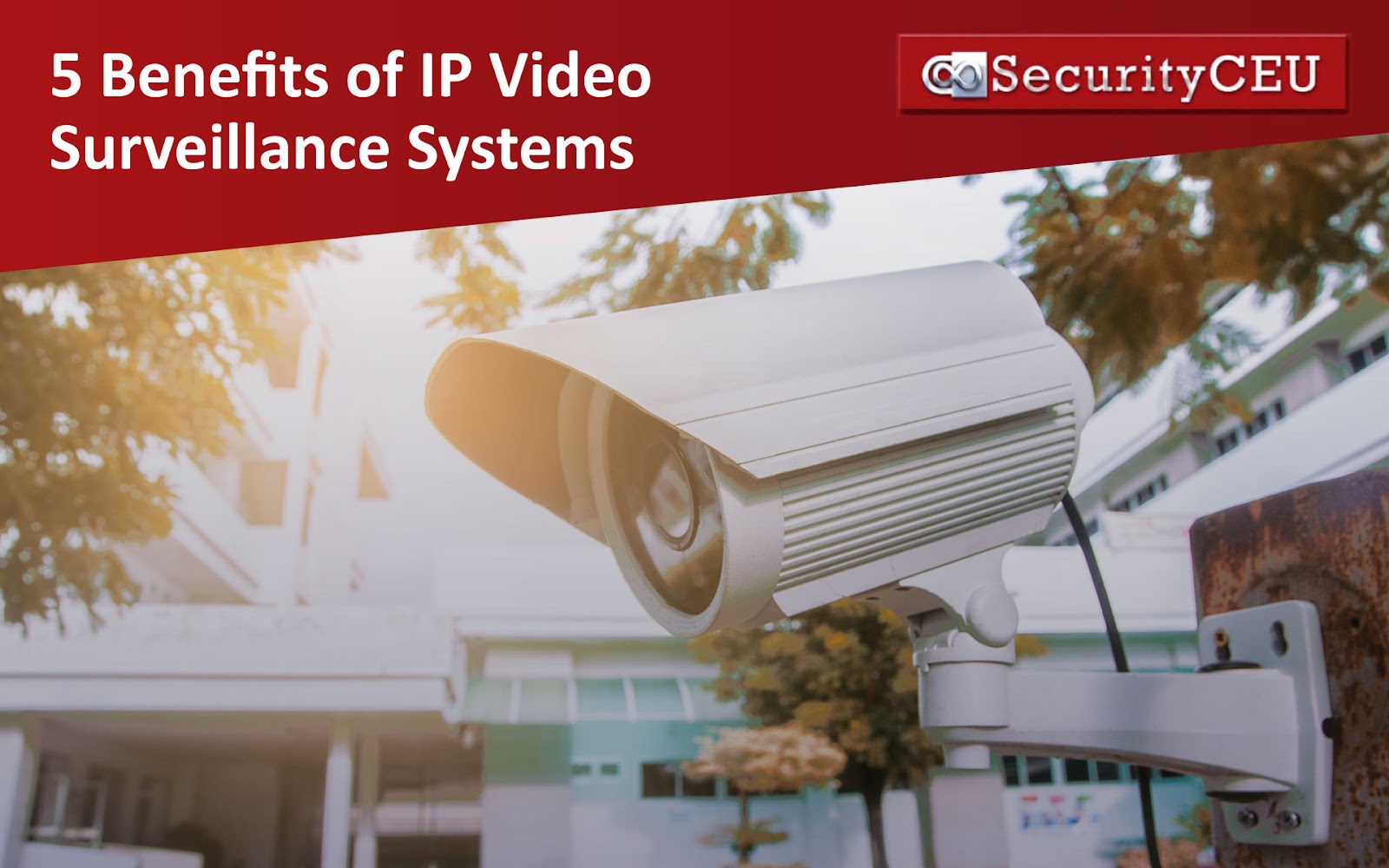
Security has become an increasingly important concern for businesses and individuals. Surveillance systems are one of the most effective tools for enhancing security measures, allowing businesses and law enforcement agencies to monitor their premises and respond quickly to potential threats. With the implementation of IP video surveillance technology, surveillance systems have evolved to become more sophisticated and powerful than ever before.
IP video technology offers several advantages over traditional analog cameras, including higher image resolution, better video analytics, and more flexibility in terms of placement and networking. In addition, IP video cameras have lower maintenance costs and can be easily integrated with other security systems, making them an ideal choice for businesses looking to enhance their security measures while keeping costs under control.
In this blog post, we will explore the five key reasons why IP video is the current king of video surveillance: its